Never lose another family photo: how AI can help you name, store and share them
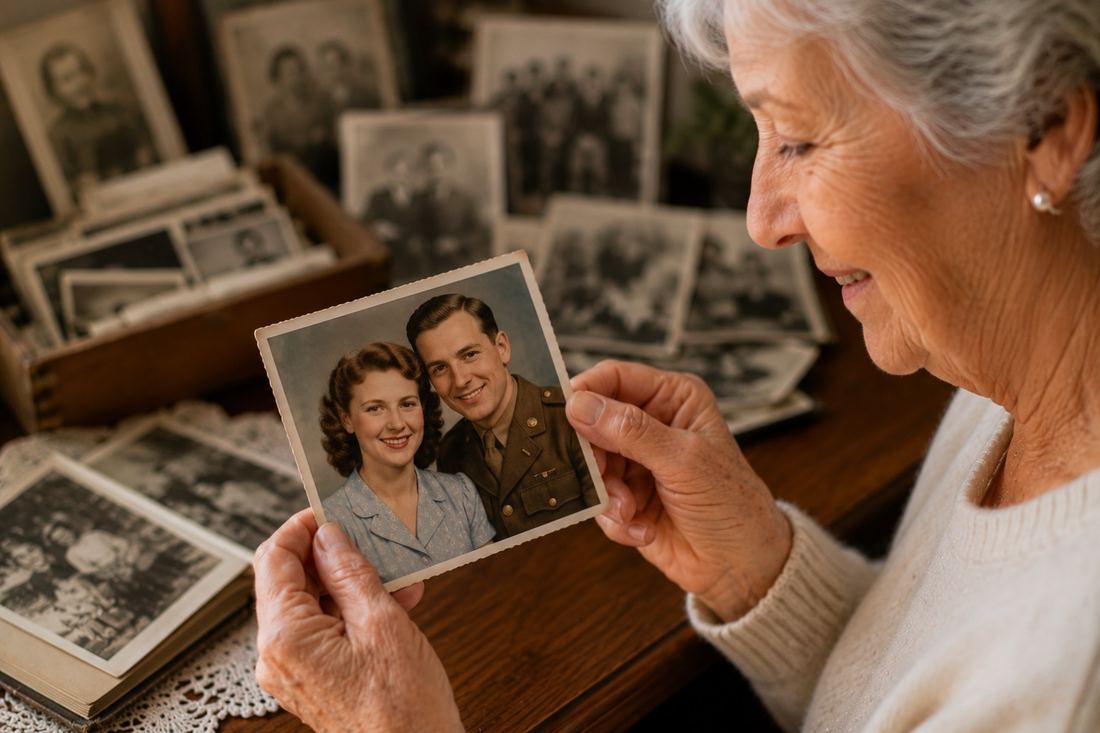
Most families have the same problem, just spread across different places. Photos on an old phone that has not been switched on in years. Photos on a laptop nobody has backed up. A memory card from a camera that no longer exists. A shoebox of prints in a cupboard. Everyone means to sort it out properly one day, and the collection just keeps growing instead.
AI cannot go through your shoebox for you, but it is a useful adviser for the decisions that usually stop people starting: where to actually put everything, how to name and organise it so you can find things again, and how to let the rest of the family see it and add their own photos too, without it turning into a technical project.
Deciding where everything should live
The honest answer is that there is no single correct choice, only the one that suits the devices your family actually uses. AI is well suited to talking this through with you, because it can weigh up your particular situation rather than giving a generic answer.
A cloud photo service. Google Photos and Apple iCloud Photos are the two most common choices in the UK, and both will automatically back up new photos, sort them roughly by date, and let you search for things like "beach" or a person's name. Which one suits you best usually comes down to whether your family mostly uses iPhones or Android phones.
A shared family album. Both Google Photos and iCloud Photos also offer a shared album that several people can add to, which is often the simplest starting point if bringing everyone's photos together is the main goal.
A shared folder. Services such as Google Drive or Dropbox work more like a filing cabinet than a photo app. Less polished, but familiar if you are already comfortable with folders on a computer.
A backup drive. A small external hard drive is cheap and keeps a copy that does not depend on any company or subscription. Best used alongside one of the above rather than instead of it, since a single drive can still be lost, damaged or stolen.
"I have photos scattered across an old phone, a laptop and some memory cards. My family mostly use [iPhones/Android phones]. What would be the simplest single place to bring them all together, and why would you suggest it over the alternatives?"
Naming and organising so you can find things again
If you use a modern photo service, it does most of this for you automatically by date and, often, by recognising faces and places. Manual naming matters more if you prefer working with folders on a computer, which many people still find easier to picture and trust.
A simple, consistent system beats a clever one. Something like a folder per year, with a folder inside for each event or trip, named plainly: "2019 Family Holiday Cornwall" rather than a string of numbers from a camera. AI is good at helping you settle on a system you will actually stick to, and at working out how to apply it to photos you already have without redoing everything by hand.
"Can you suggest a simple, consistent way to name and organise photo folders on my computer, by year and event, that I could realistically keep up going forward?"
If some of what you gather includes old black and white photographs, Kevin's free AI Photo Coloriser will add colour back into them automatically, right in your browser, which is a lovely thing to do once everything is finally in one place.
Giving the rest of the family access
Once your photos are somewhere sensible, the next question is how everyone else gets to see them. A shared album through Google Photos or iCloud Photos is generally the easiest route: you invite people by sending them a link, they view it in the same app they may already use, and no separate account or download is usually needed. A shared folder through Google Drive or Dropbox works in a similar way and suits families who prefer thinking in folders rather than albums.
For something more casual, simply sending photos through WhatsApp or email works, though it is worth knowing that most messaging apps compress photos, so quality suffers if you want to keep them properly rather than just look at them once.
"I want my two adult children to be able to see photos of the grandchildren in one shared place. We use [devices]. What is the simplest way to set that up, and how do I send them the invitation?"
Letting family add their own photos too
This is where a shared album earns its keep over simply sending photos to people. Both Google Photos shared albums and Apple's Shared Photo Library allow more than one person to add pictures to the same collection, so a grandchild's birthday ends up in one place with photos from everyone who was there, rather than scattered across several people's phones. You can usually choose whether everyone can add photos freely or whether you approve what goes in first.
"I'd like my family to be able to add their own photos to the same shared album, not just view mine. How do I set that permission, and can I control who is able to do it?"
If you would rather go step by step
Whichever option you choose, ask AI to walk you through the actual setup on your specific phone or computer, one step at a time, rather than reading a general explanation. Screens and menus change between software updates, so this works better than following written instructions that may already be slightly out of date.
"I want to set up a shared Google Photos album on my iPhone. Can you give me the first step, and wait until I tell you it's done before giving me the next one?"
A project this finally got moving
I had photos spread across two old phones, a laptop I rarely used and a drawer of memory cards, and had been meaning to sort it out for years without ever starting. I asked AI to help me choose one place to bring it all together based on the devices my own family uses, and to talk me through setting up a shared album step by step. What had felt like an overwhelming job for years took an afternoon, and my family have been adding their own photos to it ever since.
Questions you can use word for word
"I have photos spread across [list where]. What's the simplest single place to bring them together, and why?"
"Can you suggest a simple way to name and organise my photo folders that I'll actually keep up?"
"How do I set up a shared album my family can both view and add photos to?"
"Can you walk me through this step by step, on my own phone/computer?"
A word of caution
A single cloud service is convenient, but it is not a complete backup plan on its own. It is worth keeping a second copy somewhere else, such as an external hard drive, for anything truly irreplaceable. Take care too with sharing settings, particularly around photos of children. Check who a shared album is actually visible to before you rely on it, rather than assuming it is private by default. AI is an excellent guide through all of this, but treat exact menu names and steps as a starting point, since apps update their screens more often than any explanation can keep up with.


Want a hand getting your own photos sorted?
If you'd like to try this for real, bring along whatever device holds most of your photos to one of Kevin's sessions and ask to be shown afterwards, one-to-one. Prefer more time and focus? Book a one-to-one coaching hour and get it properly set up together.
See upcoming library events Try apps, songs & games made with AI