Home My Book Blog Upcoming Events Contact Book a Free Talk
Practical ideas & insights

The AI For Your Life Blog

Honest, useful writing about AI in everyday life. No jargon, no hype — just ideas you can actually use.

Man looking delighted and surprised at what AI has just done on his phone
Personal reflection

Five things AI did for me this week that genuinely surprised me

A personal look at five moments this week when AI went beyond what I expected — including one that saved me three hours.

Kevin Conroy  ·  May 2026
Older woman relaxed at home with phone, tablet and smart speaker
Getting started

The best first question to ask an AI — and why most people get it wrong

Most people start with a question that's too vague. Here's how to get a much better result from the very first thing you type.

Kevin Conroy  ·  May 2026
Woman writing a letter with a smile — crumpled attempts around her
Practical tip

How to write any letter in under three minutes using AI

Complaint letters, thank-you notes, formal requests — AI handles them all beautifully. Here's exactly how to do it.

Kevin Conroy  ·  April 2026
Man cooking in the kitchen following an AI recipe on his tablet
In the kitchen

AI in the kitchen — it turned out to be one of the most useful things I tried

From recipes based on whatever's in the fridge to meal planning and adapting dishes for dietary needs — AI is a remarkable kitchen companion.

Kevin Conroy  ·  April 2026
Woman tending roses in a beautiful garden — AI helps with hobbies too
Hobbies & interests

How AI has opened up my hobbies in ways I never expected

Gardening, painting, family history, crafts — AI can advise, inspire and teach in ways that bring real joy to the things you already love.

Kevin Conroy  ·  March 2026
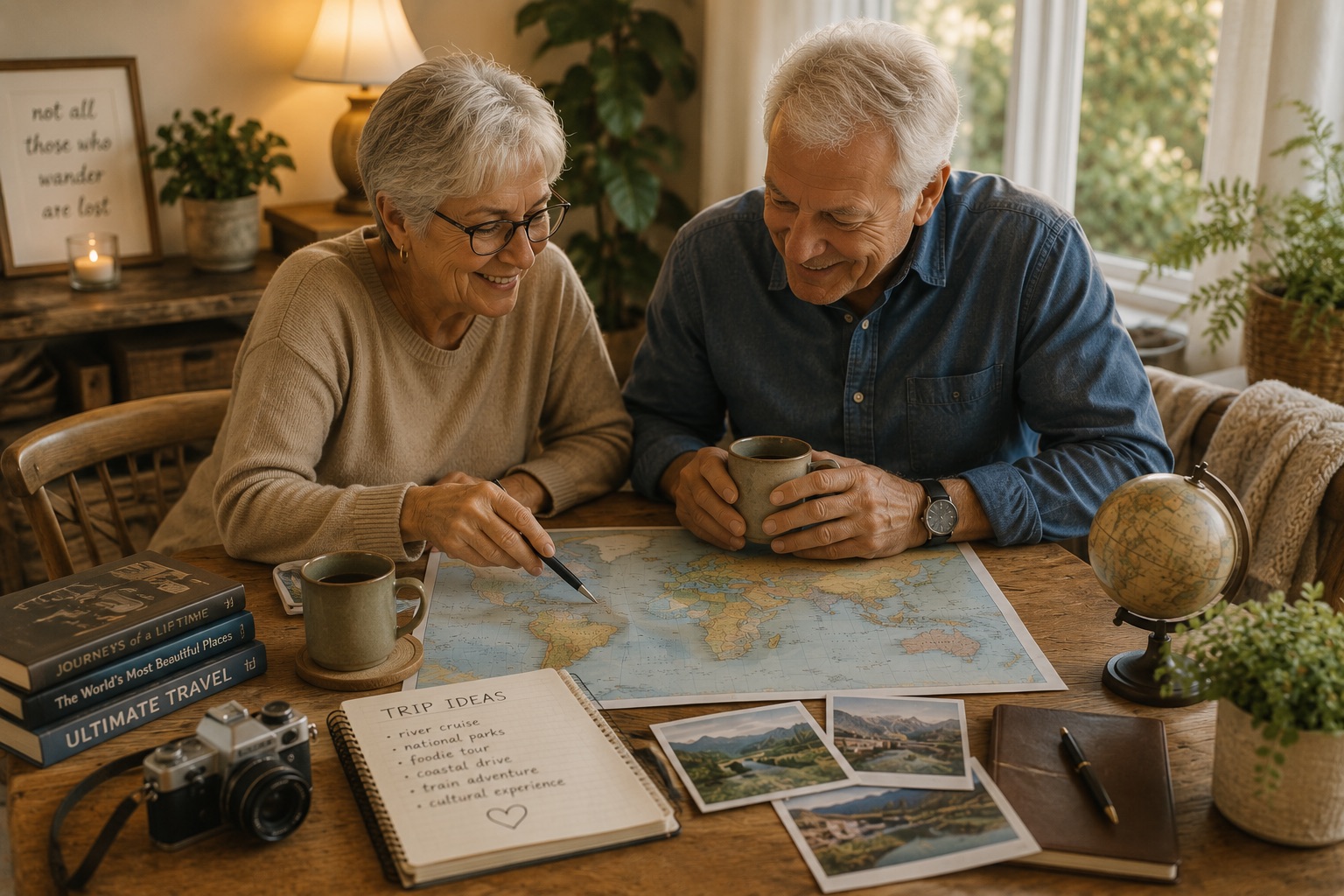
A couple with a map and coffee planning an exciting holiday trip together
Travel & adventure

Your perfect holiday — planned by AI in the time it takes to drink a cup of tea

Road trips, once-in-a-lifetime adventures, long haul, short breaks, staycations — AI will plan any of them in extraordinary detail. Here's how.

Kevin Conroy  ·  June 2026
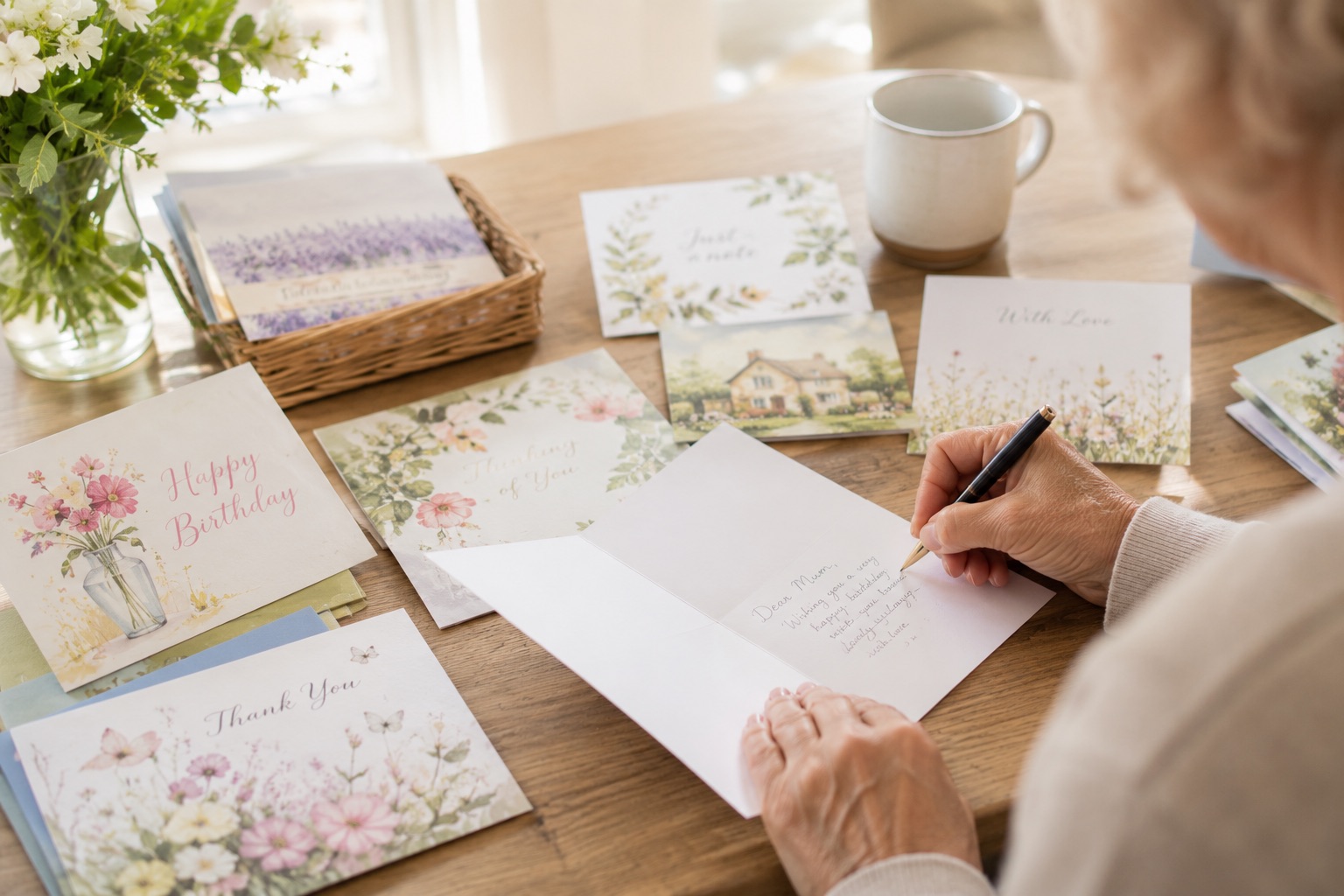
A collection of greeting cards spread on a table — birthdays, weddings, Christmas and more
Cards & occasions

The perfect words for any card — written by AI, felt by the person who receives it

Birthdays, funerals, weddings, new babies, Valentine's Day — AI can write a personalised verse for any occasion in seconds. Here's how.

Kevin Conroy  ·  June 2026
Grandparent reading a personalised bedtime story to a delighted child tucked up in bed
Family & grandchildren

The bedtime story that stars your grandchild — and their dog, their gran and what they did today

AI can write a personalised bedtime story in under a minute, using real names, real pets and today's real events. Here's exactly how to do it.

Kevin Conroy  ·  June 2026
Older woman beaming with delight at her tablet — a sceptic converted
For the sceptics

If you're not sure AI is for you — this is the post to read

A calm, honest look at the concerns people have about AI — and some answers that might change your mind.

Kevin Conroy  ·  March 2026

Want to experience this in person?

Kevin's free library presentations bring these ideas to life with live demonstrations and real examples. Come along — it's free, friendly and no booking needed.

See upcoming events Read the book
← Back to all posts

Five things AI did for me this week that genuinely surprised me

I've been using AI almost every day for a while now. And yet, nearly every week, something happens that makes me stop and think: I genuinely wasn't expecting that. This week had five of those moments, and I thought it was worth sharing them.

1. It found the right words when I couldn't

I needed to write a letter about a difficult situation — something sensitive that required exactly the right tone. I'd been staring at a blank page for twenty minutes. I described the situation to AI, explained that I needed to be firm but not aggressive, clear but not cold. The reply it produced was almost exactly what I'd been trying to say. With a few small tweaks, it was done.

2. It gave me a recipe that actually worked

I had a collection of things in the fridge that didn't obviously go together and asked AI to suggest something to make for dinner. It came back with a recipe I'd never have thought of — and it was genuinely delicious. My family asked me to make it again.

3. It explained a medical letter in plain English

A letter arrived from a hospital with a lot of terminology in it. I typed the key parts into AI and asked it to explain what they meant in simple terms. Within seconds I had a clear, calm explanation. I went to the follow-up appointment feeling much more prepared.

4. It helped me plan a trip I'd been putting off for years

I had a vague idea of a trip I'd always wanted to take but never got around to planning. I told AI roughly what I was thinking — the region, the kind of things I like — and asked it to help me put together a rough itinerary. What came back was detailed, thoughtful and genuinely exciting.

5. It saved me three hours of research

I needed background information on a fairly niche topic for a project I was working on. In the past I'd have spent an afternoon going back and forth between websites. I asked AI a series of questions and had everything I needed in about fifteen minutes.

Want to go further?

All of this — and much more — can be explored in depth at one of Kevin's workshops or in a follow-up session after a free library talk. If anything here has caught your imagination, ask Kevin to show you how it works.

See upcoming events
← Back to all posts

The best first question to ask an AI — and why most people get it wrong

When people first sit down with an AI tool, the most common thing they type is something like: "What can you do?" or "Hello." And while there's nothing wrong with that, it tends to produce a rather generic reply — a long list of capabilities that doesn't really tell you much.

The better approach: start with something real

The single most effective way to get value from AI straight away is to bring it a real problem — something you're actually trying to do. Not a test. Not a vague question. A genuine task.

For example, instead of asking "What can you do?", try something like: "I need to write a polite letter to my landlord asking them to fix the boiler. Can you help me write it?"

Immediately, you'll see something useful happen. AI will ask you a question or two, produce a draft, and show you — in a concrete and personal way — what it can actually do.

Why this works better

AI is at its best when it has something specific to work with. The more context you give it — the situation, the tone you want, who it's for — the better the result will be. A real task gives it all of that naturally, without you having to think too hard about it.

A simple rule to remember

Think of AI like a very capable assistant who is brand new to the job. They're eager to help and can do almost anything — but they need you to tell them what's needed. The more clearly you describe the task, the better the result.

Want to try this for yourself?

Getting the most from AI is something Kevin can walk you through properly at one of his workshops or in a follow-up session after a free library talk. If you'd like to give it a go, just ask Kevin to show you.

See upcoming events
← Back to all posts

How to write any letter in under three minutes using AI

Letter writing used to be one of those tasks that people would put off for days. The blank page, the finding of the right words, the worry about tone — it's genuinely difficult. AI has changed all of that completely.

Step one: describe the situation

Open your AI tool and describe what's happened. Don't worry about being formal or structured — just write it as you'd explain it to a friend. For example: "I need to write a letter to my energy company. They've charged me incorrectly and I've been trying to get it sorted for two months with no response."

Step two: tell it the tone you want

Add a sentence about how you want to come across. "I want to be firm and clear, but polite — I don't want to be aggressive." This makes an enormous difference to the result.

Step three: read and adjust

AI will produce a draft in seconds. Read it through. If anything doesn't sound like you, or needs changing, just say so: "Can you make the opening a bit warmer?" or "Can you add a specific request for a response within 14 days?"

What kinds of letters work well?

Want to try this yourself?

Letter writing with AI is something Kevin can take you through properly at one of his workshops or in a follow-up session after a free library talk. You'll leave having done it yourself — and knowing you can do it again at home. Just ask Kevin to show you.

See upcoming events
← Back to all posts

AI in the kitchen — it turned out to be one of the most useful things I tried

I'll be honest — the kitchen wasn't the first place I thought to use AI. But once I did, it quickly became one of my favourite applications. The range of ways it can help is genuinely surprising, and the results are far more useful than any recipe website I've used before.

What's in the fridge? AI will tell you what to make.

This is the one that people react to most. You open the fridge, list what you've got — a few vegetables, some leftovers, half a pack of pasta — and ask AI to suggest something to cook. It comes back with a proper recipe, adapted to exactly what you have. No more staring blankly at ingredients wondering what to do with them.

Adapting recipes to your needs

Whether it's avoiding certain ingredients for health reasons, adapting a recipe for someone who doesn't eat meat, or scaling a recipe up or down for more or fewer people — AI handles all of it instantly. Just describe what you need and it adjusts the recipe accordingly.

Planning a week of meals

Ask AI to plan five dinners for the week ahead, factoring in what you already have and what you enjoy. It will produce a shopping list at the same time. What used to take twenty minutes of thought takes about thirty seconds, and the ideas are often better than the ones I'd come up with myself.

Replacing a cookbook

Whatever cuisine you fancy — Italian, Indian, Thai, old-fashioned British — AI knows an enormous number of recipes and can explain each step clearly and at your own pace. It's endlessly patient and never makes you feel foolish for asking a basic question.

Want to explore this further?

This is just one of many practical things that can be covered in depth at one of Kevin's workshops or in a follow-up session after a free library talk. If the kitchen ideas have caught your eye, ask Kevin to show you more.

See upcoming events
← Back to all posts

How AI has opened up my hobbies in ways I never expected

People sometimes assume AI is primarily a work tool — something for writing emails or getting information quickly. That's true, of course. But some of the most joyful reactions I see at my sessions come when people discover what AI can do for the things they love most.

Gardening

This is an area where AI genuinely shines. You can describe a plant you've found and ask what it is. You can explain a problem — yellowing leaves, unusual spots, something eating the flowers — and get a thoughtful diagnosis. You can ask what to plant in a shady corner, how to improve clay soil, or what to do in the garden in any given month. The answers are detailed, practical and tailored to exactly what you've described.

Painting and crafts

AI can suggest techniques, recommend supplies, explain the difference between approaches, and help you work through a creative problem when you're stuck. It's like having a knowledgeable friend who never gets tired of your questions.

Family history and genealogy

This is another area where AI can save hours of work. Searching for records, understanding historical context, figuring out where to look next — AI can guide you through the process in a way that's genuinely helpful rather than overwhelming.

Anything you love

The pattern I've noticed is this: whatever someone is passionate about, AI finds a way to make it richer. It's curious, knowledgeable and enthusiastic about almost every subject — and that enthusiasm is infectious. Bring your hobby to a session and let's find out what's possible.

Want to see what AI can do for your interests?

Kevin loves finding out what people are passionate about. This kind of personalised exploration is something he can go into properly at one of his workshops or after a free library talk. Just ask — and bring your hobby with you.

See upcoming events
← Back to all posts

If you're not sure AI is for you — this is the post to read

I meet a lot of people who arrive at my sessions with their arms firmly crossed. They're there because someone persuaded them to come, or out of mild curiosity, or just to prove a point. By the end of the session, those tend to be some of my favourite conversations. Because the sceptics often ask the best questions — and when something lands for them, it really lands.

"I'm too old to learn this."

You're not. I meet people in their seventies and eighties regularly who take to AI with genuine enthusiasm. It doesn't require any technical knowledge. If you can type a question, you can use AI. That's genuinely all there is to it.

"I don't trust it."

That's a sensible instinct — and I'd never ask you to abandon it. AI isn't perfect and can sometimes get things wrong. The trick is knowing when to trust it (writing, planning, explaining, organising) and when to double-check (anything factual that matters). I cover this at all my sessions.

"It seems very complicated."

It really isn't. Opening a conversation with an AI tool is simpler than sending an email. You type a question in plain English and it replies in plain English. That's the whole thing. There's no jargon, no command to learn, no manual to read.

"I don't see how it would help someone like me."

This is the one I love most — because within ten minutes I can almost always find three or four things it would genuinely help with. Gardening questions. Letters. Holiday planning. Recipes. Understanding health information. Understanding what grandchildren are talking about. It's remarkably broad.

"What if I break something?"

You can't. There's nothing to break. You type, it replies. Close the window and it's gone. There's no risk, no danger, nothing fragile. Even the most cautious person I've met has relaxed completely once they understood this.

Come along with your scepticism intact

Kevin actively welcomes sceptics at his free library talks. And if anything sparks your curiosity, all of this can be explored in much more depth at one of his workshops afterwards. Bring your reservations — they make for the best conversations.

See upcoming free events
← Back to all posts

Your perfect holiday — planned by AI in the time it takes to drink a cup of tea

Holiday planning used to mean stacks of brochures, hours on comparison websites, endless browser tabs open at once — and still not being entirely sure you'd made the right decisions. AI has changed all of that. It now takes me a fraction of the time to put together a detailed, personalised travel plan, and the results are genuinely better than anything I'd have pieced together on my own.

Whatever kind of trip you have in mind — modest or magnificent, nearby or the other side of the world — here's how AI can help you plan it properly.

The staycation — discovering what's on your doorstep

This is where a lot of people start, and the results are often wonderfully surprising. You tell AI roughly where you are, how long you have, what you enjoy, and whether you're travelling alone, as a couple, or with family. It comes back with a day-by-day itinerary — places to visit, things to do, places to eat, drives to take. For Norfolk alone, the suggestions it produces could keep you busy for a month.

"I'd like a four-day staycation based in North Norfolk. There are two of us — we love coastal walks, good food, local history and quiet villages. We have a car. Can you plan an itinerary with somewhere to eat each evening?"

That's the kind of prompt that produces a genuinely useful plan within seconds.

A short break in the UK or Europe

Tell AI what kind of experience you're after — city, countryside, coast, culture — and it will suggest destinations you might not have thought of, explain what makes each one special, and then build a full itinerary around whichever one appeals. It can factor in how you're travelling, your budget, and the time of year. It knows which places are best avoided in peak season and which hidden gems are worth the detour.

Long haul — the big trip

This is where AI really earns its place. Planning a long-haul trip — America, South East Asia, Australia, Africa, Japan — used to mean months of research. With AI you can have a detailed skeleton plan in an afternoon. Tell it how long you have, the rough style of trip you want (adventurous, relaxed, cultural, a mixture), whether you want to stay in one place or travel around, and any practical considerations such as mobility or dietary needs. It will suggest routes, accommodation types, things not to miss, and things most tourists overlook.

I've seen people at my sessions plan a three-week trip to Japan — including regional trains, temples, food markets and the right time to see cherry blossom — in about twenty minutes of back-and-forth conversation with AI. It was better than anything a travel agent would have produced.

The once-in-a-lifetime trip

Perhaps there's somewhere you've always wanted to go but never quite got around to planning — the trip that's been sitting in the back of your mind for years. AI is particularly good at this kind of dream-to-plan conversion. You describe what you've imagined, it asks a few questions, and piece by piece something real and achievable starts to take shape. Safari in Kenya. The northern lights in Iceland. A road trip along Route 66. The Amalfi Coast by boat. Whatever it is, AI knows it well and will help you plan it properly.

The great road trip

Road trips have a particular magic — the freedom of having no fixed schedule, the joy of stopping when something catches your eye. AI understands this. Tell it your starting point, your rough destination or direction, how many days you have and what kind of things you like to see, and it will suggest a route with daily stages, overnight stops, highlights along the way and practical advice about driving times. You can ask it to favour coastline over motorway, small towns over cities, or to build in flexibility for unplanned detours.

Adapting for practical needs

One thing I particularly value about AI travel planning is how naturally it handles practical requirements. Travelling with limited mobility? It will suggest suitable accommodation and accessible attractions. Travelling with grandchildren? It will build child-friendly stops into every day. Dietary requirements, travel insurance questions, visa information, what the weather is likely to be — you can ask about any of it in plain English and get a clear, helpful answer.

Making a picture to inspire you

Before you even book a thing, an AI image tool can paint a picture of where you're going — quite literally. Describe the scene that represents your dream trip and an image generator such as Adobe Firefly or the one built into ChatGPT will produce something that makes it feel suddenly, excitingly real.

"A photorealistic image of a classic American road trip — an open highway cutting through a vast desert landscape at golden hour, a vintage car in the distance, mountains on the horizon and a huge open sky. Cinematic, warm light, breathtaking scale."

Print it out. Put it on the fridge. Let it remind you every morning that the trip is coming. It's a small thing, but it makes the whole plan feel wonderfully tangible.

The best part

What I love most about AI travel planning is the conversation of it. You don't have to know exactly what you want before you start. You can think out loud, change your mind, ask what it would suggest if you only had five days instead of ten, or wonder aloud whether Portugal might suit you better than Spain. AI will follow every twist and turn of your thinking and help you find your way to something that genuinely excites you.

Want Kevin to show you how it's done?

Holiday planning with AI is one of the most enjoyable things to explore at one of Kevin's workshops or in a follow-up after a free library talk. If you have a trip in mind — near or far — just ask him to show you how to plan it.

See upcoming events
← Back to all posts

The perfect words for any card — written by AI, felt by the person who receives it

I'll be honest with you — I'm not a natural poet. I never have been. When a card needed something personal and heartfelt, I'd stare at a blank page for ten minutes and end up writing something perfectly adequate and completely forgettable.

AI changed that for me completely. And it's now one of the things I use most often, and one of the things I enjoy demonstrating most, because the reaction it produces is almost always the same: That's exactly what I wanted to say.

Any occasion, any tone, any person

The range of occasions where a personal verse makes all the difference is enormous. I've used AI to write verses for birthdays — from a cheeky limerick for a friend turning fifty to something genuinely moving for an elderly parent. Weddings, anniversaries, new babies, retirement, passing a driving test, Valentine's Day, Christmas. And yes, funerals too — perhaps the hardest words of all to find, and the ones where getting it right matters most.

The key is to tell AI who the person is. Not just their name — but a little about them. What makes them them. Something that's happened recently in their life. A shared memory, an in-joke, something they're going through right now. The more you tell it, the more the verse will feel as though it could only ever have been written for that one person.

A real example — word for word

Here's the kind of thing I might type for a friend's birthday:

"Please write a short, warm and slightly funny verse for my friend Margaret's 70th birthday. She's just retired after 40 years as a nurse, she loves her garden, and she's recently taken up wild swimming. Make it rhyme and keep it to about eight lines."

What comes back will reference the nursing career, the garden, possibly the cold water — and it will rhyme properly and read beautifully. You may want to tweak a word or two to make it sound more like you. But the heavy lifting is done.

Topical and personal — all at once

One thing I particularly love about this is that you can weave in something completely current. If your sister has just got a new job, moved house, had a difficult year, or finally booked that holiday she's been talking about for years — you can put that in. AI will work it into the verse naturally, so it reads as though you sat down and thought about her specifically. Because in a sense, you did.

For a funeral or a loss, the same principle applies. Tell AI about the person — what they meant to you, a memory you carry, the kind of person they were. What comes back can be genuinely beautiful, and writing it that way can itself be a quiet comfort.

The occasions it works for

To give you a sense of the range — I've seen wonderful AI verses written for birthdays of every age, Christmas and New Year, wedding days and anniversaries, new babies and christenings, retirement, passing a driving test (that one always raises a laugh at my sessions), Valentine's Day, Mother's Day and Father's Day, get well soon cards, thank-you notes, and tributes for those we've lost.

There is no occasion too big or too small. If the moment matters, the words matter — and AI will help you find them.

Making a picture to go with it

If you'd like to go a step further, an AI image tool can create a beautiful illustration to print alongside your verse — turning a card into something genuinely special.

For a birthday, you might describe something personal to them. For a wedding, a scene that reflects the couple. For a new baby, something soft and gentle. Here's an example of what you might type into an image tool like Adobe Firefly or the image generator in ChatGPT:

"A beautiful watercolour-style illustration of a cottage garden in full bloom on a summer evening, with a pair of wellies by the door and a trowel resting against a flowerpot. Warm, peaceful and slightly nostalgic."

Print the verse on one side and the picture on the other, or combine them on a single sheet. What you end up with is a card that no shop could ever sell — because it was made for one person, and one person only.

Something I come back to again and again

Of everything AI has made easier in my life, this is the one I reach for most regularly. There is always an occasion coming up. There is always someone worth saying something real to. And now, finding the right words takes about two minutes instead of never quite happening at all.

Want Kevin to show you how it's done?

Writing personalised verse — for any occasion — is something Kevin can take you through step by step at one of his workshops or in a follow-up after a free library talk. If you have an occasion in mind, just ask him to show you.

See upcoming events
← Back to all posts

The bedtime story that stars your grandchild — and their dog, their gran and what they did today

There's a particular kind of magic in a bedtime story where the child hears their own name. Their eyes go wide. They sit up a little straighter. That's me. And if their dog is in it too — and perhaps the trip to the park they had that afternoon — you've got something no published storybook can ever quite match.

AI can write that story for you. In under a minute. Every single night, if you'd like. And it will be different every time.

What to tell it

The beauty of this is how little information you actually need to give. Open your AI tool — Claude, ChatGPT, Gemini, any of them — and simply describe the story you'd like. Here's an example of exactly what you might type:

"Please write me a gentle bedtime story for my five-year-old granddaughter Ellie. Her dog is called Biscuit and her older brother is called Sam. Today she went to the park and found a shiny stone. Make it about a five-minute read and give it a calm, happy ending."

That's genuinely all you need. AI will do the rest — it will build a proper little adventure around those details, give it a beginning, a middle and a peaceful ending, and pitch it at exactly the right level for a five-year-old.

You can add as much or as little as you like

Perhaps there's a grandparent called Nana Jean who appears in the story. A cat called Marmalade who causes mischief. A favourite toy, a beloved blanket, a holiday they're about to go on. You can include as many details as you like, or keep it simple. AI adjusts to whatever you give it.

You can also tell it the mood you want. "Make it a little bit funny." "I'd like it to be soothing and dreamy — she's been a bit unsettled lately." "Can you make Biscuit the hero?" Whatever you ask, it will do its best to deliver.

Making it a nightly ritual

Some grandparents I've spoken to have made this a proper routine. They call or video-chat at bedtime, ask what the child got up to that day, and then produce a story on the spot. The child hears themselves in it within seconds. For grandparents who don't live nearby, it has become one of the most meaningful parts of the week — for both generations.

You can also save the stories. Print them out, collect them in a folder. One day that little bundle of personalised adventures will be quite something to look back on.

Making a picture to go with it

Here's where it gets even more wonderful — and this surprised even me when I first tried it.

AI image tools — such as the image generator inside ChatGPT, or a free tool called Adobe Firefly — can create a beautiful, photorealistic illustration to go with the story. And you can describe exactly what you want in it.

You might type something like this into the image tool:

"A warm, magical illustration of a little girl with brown curly hair and a golden spaniel dog, standing in a sunlit park holding a glowing stone. Storybook style, gentle colours, soft evening light."

Within about thirty seconds you'll have a picture that looks as though it came from a professionally illustrated children's book. You can print it out, send it as a photo, or just show it on screen while you read the story aloud.

You don't need any artistic ability. You don't need any technical knowledge. You just need to describe what you'd like to see — in the same plain English you'd use to describe it to a friend.

A small thing that means a great deal

Of all the things I demonstrate at my sessions, this is one that tends to produce the most immediate reaction. People reach for their phones and start typing before I've even finished explaining. Because there's someone they want to do this for — usually tonight.

It's a lovely reminder that some of the best uses of AI aren't about productivity or saving time. They're about connection. About a child somewhere in Norfolk hearing their own name in a story, with their dog at their feet and an adventure that was made just for them.

Want Kevin to show you how it works?

Personalised storytelling — and creating pictures to go with them — is something Kevin can walk you through properly at one of his workshops or in a follow-up after a free library talk. If it sounds like something you'd love to try, just ask him to show you.

See upcoming events